Winter bird feeding for a cottage garden on the chalk
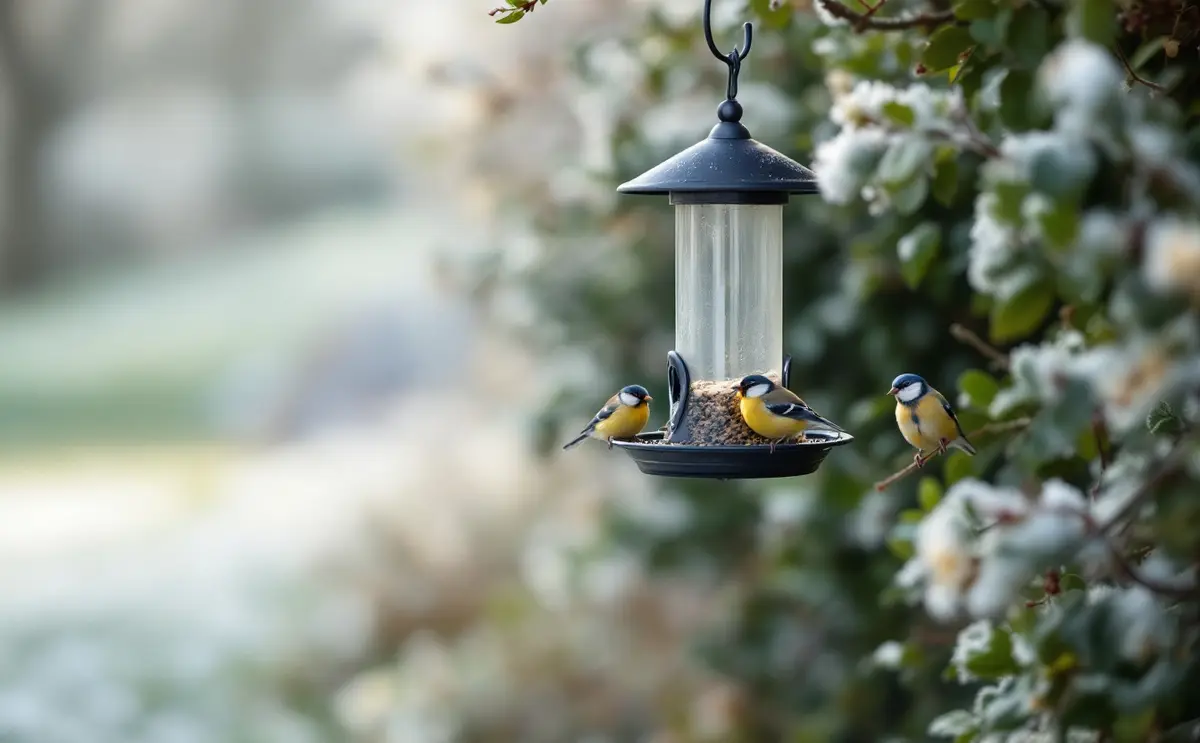
On a hard December morning the hedge at the bottom of a chalk-village garden goes quiet in a particular way. Then a robin ticks, a blue tit drops onto the feeder, and within ten minutes there are goldfinches squabbling at the ports and a blackbird working the lawn underneath. Feeding birds in winter is one of the simplest pleasures of living out here, and it is also easy to do badly.
The RSPB and the BTO have both revised their advice after research on disease at feeding stations. What follows is built on that guidance, plus a good deal of standing at the kitchen window with a mug going cold.
The season for seed and nuts
The current RSPB advice is to feed seasonally. From 1 November to 30 April you can put out a full range of foods, seed and peanuts included. From 1 May to 31 October it asks people to pause seed and peanut feeders, while small amounts of mealworms, fat balls or suet can carry on. The BTO gives the same split.
The reason is finch trichomonosis, a parasite infection of the throat that spreads where birds crowd together at feeders and drinking water. The BTO says it mainly affects greenfinches and chaffinches, and links it to the steep fall in greenfinch numbers. Outbreaks are most likely in summer and autumn, which is why the pause falls then.
So December is squarely in the feeding season. Fill up, but read the hygiene section before you do.
Which food for which bird
Different beaks, different menus. This table is a rough guide to the birds you are likely to see in a garden on the edge of King's Walden, Offley or Lilley.
| Food | Best offered in | Birds most likely to take it |
|---|---|---|
| Sunflower hearts | Tube feeder | Goldfinch, greenfinch, chaffinch, blue and great tits, house sparrow, siskin |
| Nyjer seed | Tube with fine ports | Goldfinch, siskin |
| Peanuts (plain, unsalted) | Steel mesh feeder | Blue and great tits, coal tit, nuthatch, great spotted woodpecker |
| Fat balls and suet | Wire cage or suet holder | Long-tailed tits, tits generally, starlings, house sparrows |
| Mealworms | Small dish or scattered sparingly | Robin, blackbird, wren, dunnock |
| Soft apples and pears | Halved on the ground | Blackbird, song thrush, fieldfare and redwing in hard weather |
| Small mixed seed | Scattered thinly on the ground | Dunnock, chaffinch, collared dove, house sparrow |
Sunflower hearts are the most useful single food. Birds eat them without leaving a pile of husks under the feeder, which matters for hygiene as much as tidiness.
The RSPB also lists kitchen leftovers that birds can use: fruit past its best, grated mild cheese, cooked rice and pasta, and the inside of a baked potato. Leave out anything mouldy, and anything salted. If food is still sitting there going stale, you are putting out too much.
Keeping it clean
This is where most of us fall short. The RSPB's guidance is plain and worth following to the letter:
- Clean feeders and bird baths at least once a week. Scrub with hot soapy water, then disinfect with a non-toxic disinfectant made for the job or a mild 5% bleach solution, rinse and dry before refilling.
- Clear away old food and droppings from under the feeders.
- Put out only what is eaten. The RSPB says seed and peanuts should go within one to two days and suet within seven.
- Clear mealworms by dusk, especially on the ground, so hedgehogs do not eat leftovers.
- Keep food dry. Damp food lets disease survive.
- Move feeders to a new spot every week, and if you have several, spread them out so birds do not crowd.
- Do not hang feeders under branches where birds roost, as droppings fall into the food.
- Wear gloves, and wash your hands well afterwards.
If you see a bird that looks unwell, the RSPB advises stopping feeding for at least three weeks, emptying bird baths, and only starting again when you no longer see birds with signs of disease. Sick or dead garden birds can be reported to the Garden Wildlife Health project, which collects the records.
Where to hang a feeder
Small birds want two things that pull in opposite directions: a quick dash to cover if a sparrowhawk comes over, and enough open ground that a cat cannot ambush them. The RSPB suggests feeders a couple of metres from thick cover such as a hedge or shrub, hung high enough to be out of reach of cats and away from fences, sheds or walls a cat could jump from.
In a cottage garden that usually means a pole or bracket out in the lawn or border, a short flight from the hedge. A bed of prickly shrubs under a feeder can deter cats from lying in wait, though it also makes clearing spilt seed harder.
Windows are the other hazard. Birds hit glass when it reflects sky and garden. Stickers help only if they cover a good part of the pane: BirdLife International suggests markings roughly 10 to 15 centimetres apart, and the RSPB shop's own advice is that a single sticker per window will do little. A common rule of thumb is to hang feeders either very close to a window, so a startled bird cannot build up speed, or well away from it, rather than at a few metres where a panicking flock may bolt straight at the reflection.
Water matters in a frost
Birds need water to drink and to keep their feathers in order, and in a hard frost it is harder to find than food. The RSPB advises offering water only if you can change it every day, using tap water. If your tap water is treated with chloramine (your water company can tell you), use a raised bird bath, and if your bath sits on the ground, fill it with rainwater from a lidded water butt.
On frosty mornings a kettle of warm, not boiling, water poured into the bath clears the ice. Never add salt or antifreeze. A pond is better still, if you have room for one, and a small one dug into a border will be visited from the first week.
The winter garden list in a chalk village
The regulars here are much the same as in any English village garden: robin, blackbird, dunnock, wren, blue tit, great tit, coal tit, long-tailed tits in small roving parties, chaffinch, goldfinch, house sparrow, starling, collared dove and woodpigeon. Where there are big old trees nearby you may get nuthatch and great spotted woodpecker on the peanuts. Song thrushes turn up in cold snaps.
Because the villages sit among large arable fields, a garden that backs onto farmland sometimes gets birds from outside the usual garden set, particularly in late winter when food in the fields runs short. Our piece on the farmland birds between Offley and Lilley covers who lives out there.
Winter visitors to watch for
- Fieldfare and redwing. These are thrushes that come to Britain for the winter from the north. The RSPB says they mostly stay in the countryside, feeding on berries and in fields, and come into gardens only when snow or hard frost covers their usual food. That is the moment to halve a few old apples and throw them on the lawn. Fieldfares are big, grey-headed and noisy, with a chattering "chack chack". Redwings are smaller, with a creamy stripe over the eye and rusty red on the flanks and under the wing.
- Brambling. A woodland finch from the continent, orange and black with a white rump. The RSPB notes that a few may join chaffinches at well-stocked seed feeders, so check every chaffinch flock twice.
- Siskin. A small, streaky, yellow-green finch. Siskins live in Britain all year, but many more arrive from Europe in winter, and they take readily to nyjer and sunflower hearts.
A field guide on the windowsill turns half-glimpsed birds into names. The Collins Bird Guide is the one most birders reach for, with illustrations that show birds side by side with their look-alikes.
Choosing feeders
No makes are recommended here and nothing has been tested for this piece, but the types are worth understanding.
Tube feeders
A clear or metal tube with ports and perches, for sunflower hearts and seed. Versions with small ports are made for nyjer. Look for one that comes completely apart for cleaning, with a removable base. Drainage holes in the base and a hood over the top help keep seed dry.
Mesh feeders
A steel mesh cylinder for peanuts. Birds have to peck pieces out rather than carry away whole nuts. Make sure the mesh is rigid and the lid fixes firmly, and empty it fully at each cleaning, as peanuts that get damp go mouldy.
Fat ball and suet holders
Wire cages or holders for fat balls or blocks. Take fat balls out of any plastic mesh bags before you put them out, because birds can catch their feet in the netting.
Tables and ground feeding
A bird table is the traditional cottage-garden feature, but the RSPB now advises against flat feeders, bird tables included, because contaminated food and droppings collect on flat surfaces and help disease spread. Hanging feeders are better. Ground feeders such as blackbirds and dunnocks are best served by small amounts scattered fresh each day and cleared before dusk, in a different spot each week.
Planting does as much as feeders over a year. Ivy, teasels and berrying shrubs give birds food in the lean months, and if you grow vegetables, a few brassicas left to flower and seed on an allotment plot bring goldfinches in late summer. The plant list in our guide to chalk garden plants for thin, dry soil has more ideas that cope with dry chalk.
Questions readers ask about winter feeding
Will the birds starve if I go away?
Garden birds feed from many places, not just your garden. A gap of a few days does no harm. It is better to empty feeders before a long absence than to leave food going stale.
Is bread all right?
Bread fills birds up without giving them much goodness. Seed, fat and fruit do far more for them in a cold spell.
Should I stop at the end of April?
For seed and peanuts, the RSPB and BTO advice is to pause from 1 May to 31 October. Small amounts of mealworms, fat balls and suet can continue, with the same weekly cleaning.

Bryony spends early mornings on field edges listening for skylarks and yellowhammers. She writes about farmland birds, hares, wild flowers and the life of the hedges.