Chalk garden plants for thin, dry soil
By the middle of July a chalk garden tells you the truth about itself. The spring flush is over, the rain has gone somewhere else, and anything that was only pretending to like the soil starts to sag by four in the afternoon. The plants that are still upright and flowering are the ones worth growing again.
I garden on the sort of ground you find all over this corner of north Hertfordshire: a shallow layer of dark crumbly soil, then lumps of chalk, then more chalk. The fields round King's Walden, Offley and Lilley sit on the same rock, which is why the old parish histories describe corn as the main crop and why every ploughed field glints with flints. If you have just moved here from somewhere with heavy clay or deep loam, this piece is the conversation I wish someone had had with me in my first summer.
What chalk soil is actually like
The Royal Horticultural Society's description fits most gardens here. Chalky soils are often shallow, stony and free-draining. They warm up quickly in spring, which is lovely, and they rarely waterlog, which is lovelier still in February. The trouble comes later. Light chalk soils can dry out hard in summer, they tend to be short of nutrients, and organic matter you add seems to vanish almost as soon as you dig it in, because it breaks down quickly.
The other defining feature is alkalinity. The RHS gives chalky soils a pH of usually 7.1 or above, and the water from our taps is hard. That high pH locks up iron and manganese, so plants that need them can show yellowing between the leaf veins. Gardeners call this lime-induced chlorosis, and it is the reason some much-loved shrubs simply refuse to settle.
Not every chalk garden is the same. Some have a good depth of topsoil over the rock; others have a few centimetres of soil and then something close to white gravel. Before choosing plants, find out which you have.
Test before you plant
Two simple checks save a lot of disappointment.
First, test the pH. A simple home testing kit will do, and the RHS recommends using one. Take samples from a few spots, because soil near a house wall full of old mortar and rubble can read higher than the middle of a bed.
Second, dig a hole. Go down with a spade in several places and note where the soil stops and the chalk starts. The RHS suggests that on very shallow chalk you may need to bring in topsoil, roughly 20 to 30cm for borders and more for shrubs. For trees and larger shrubs it advises breaking up the chalk below to a good depth, around 75cm, so roots can push down. Chalk is often fissured underneath, and roots that find those cracks can reach water that surface roots never see.
Feeding and mulching
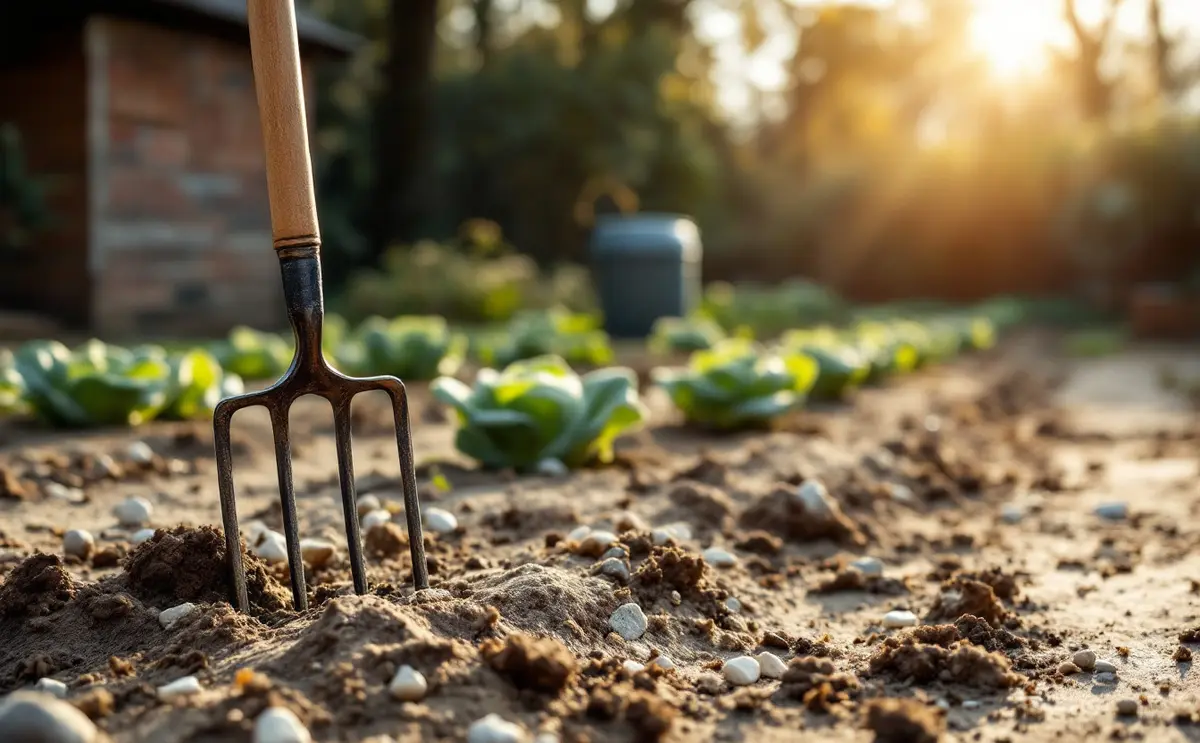
On thin chalk, the soil needs regular help. Dig in plenty of well-rotted organic matter when you prepare a bed: garden compost, leaf mould, or well-rotted farmyard manure. Then keep adding it, because it does not last.
Mulching is the habit that makes the biggest difference. The RHS advises a layer of at least 5cm of organic mulch between late autumn and late winter, roughly November to February, when the soil is moist. It holds water in, feeds the soil slowly and keeps weeds down. I do mine in December on a dry day and it is one of the most satisfying jobs of the year: by spring the worms have pulled half of it in.
On a vegetable patch or allotment, green manures help too. The RHS mentions crimson clover, vetches and bitter blue lupin as nitrogen-fixing options. There is one consolation for vegetable growers here: brassicas are less likely to suffer from clubroot on chalk.
Plants that cope well
The RHS publishes a long list of plants suited to chalky soil, and the plants below are all from it. I have chosen the ones that also shrug off a dry summer. Heights and flowering times vary with the variety and the season, so treat these as rough guides and check the label.
| Plant | Approximate height | Main flowering | Notes |
|---|---|---|---|
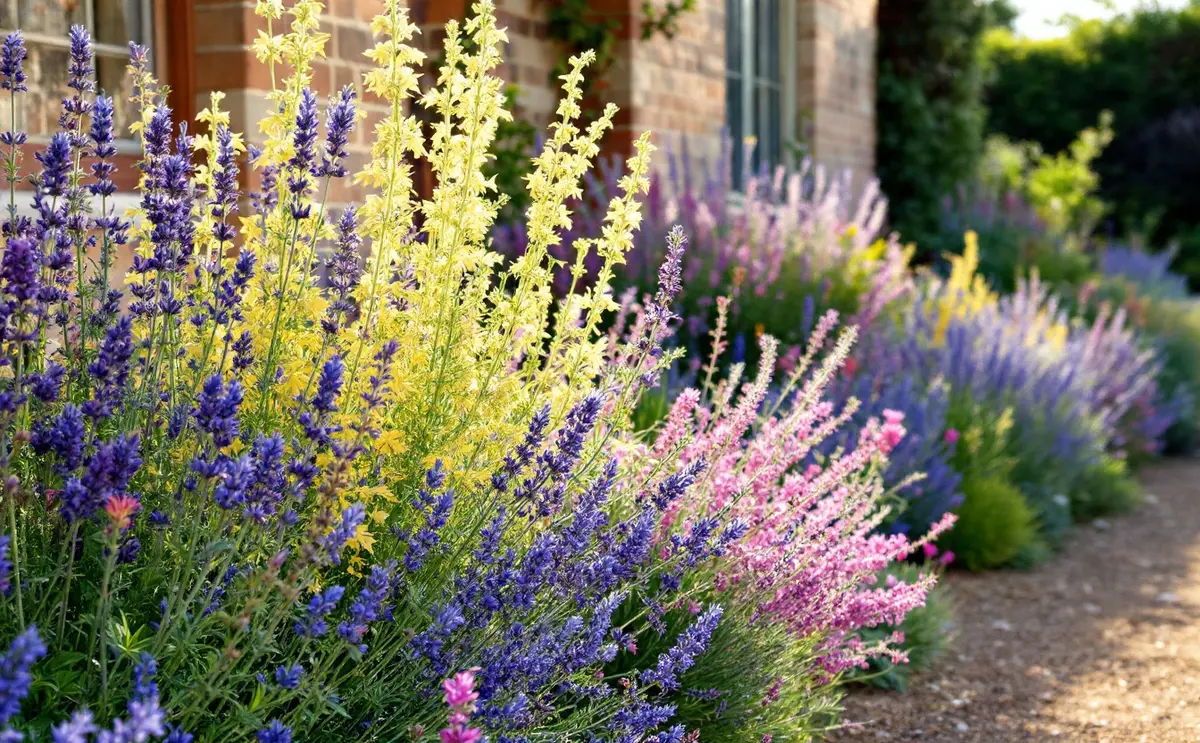
| Lavender (Lavandula) | 40 to 80cm | Midsummer | Full sun; trim after flowering but avoid cutting into old bare wood |
| Small scabious (Scabiosa columbaria) | 30 to 60cm | Summer into early autumn | A native chalk downland flower; loved by bees |
| Greater knapweed (Centaurea scabiosa) | 60 to 90cm | Summer | Native; purple thistle-like heads, good for butterflies |
| Field scabious (Knautia arvensis) | 50cm to 1m | Summer | Native; lilac pincushions on wiry stems |
| Salvia | 40 to 70cm for border kinds | Early to late summer | Cut back after the first flush for more flowers |
| Rock rose (Cistus) | 50cm to 1.5m | Early summer | Evergreen shrub for a hot, sunny spot; needs sharp drainage |
| Sea holly (Eryngium) | 30cm to 1m | Mid to late summer | Deep roots; dislikes being moved once settled |
| Mullein (Verbascum) | 60cm to 1.5m or more | Early to midsummer | Often short-lived but self-seeds |
| Clematis | Varies widely | Varies by type | Roots in shade, top in sun; a mulch over the roots helps |
| Lilac (Syringa) | 2 to 4m | Late spring | One of the RHS's examples of a lime-loving shrub |
| Buddleja | 2 to 3m | Mid to late summer | Prune hard in spring; seeds itself into walls and waste ground |
| Rosemary (Rosmarinus officinalis) | 1 to 1.5m | Spring | Evergreen; prefers a sunny, sheltered place |
| Marjoram (Origanum vulgare) | 30 to 60cm | Mid to late summer | Native herb; covered in insects when in flower |
A pattern runs through that list. Many of these are Mediterranean plants, or plants from dry grassland, used to lean soil and full sun. The RHS points to Mediterranean and prairie-style planting as a good fit for chalk, and that is my experience too. Feed them too generously and they grow soft and flop.
One more piece of RHS advice I would underline: plant small. Young plants establish more quickly on chalk than big ones, which can sit and sulk for a season or two. A pot of lavender cuttings will often overtake a large plant bought in full flower.
Borrowing from the downs
The best teacher for a chalk garden is the nearest piece of old chalk grassland. Telegraph Hill, the Pegsdon Hills and the slopes along the Icknield Way still hold fragments of it, and a walk there in June or July shows what grows naturally on this soil without any help at all.
Natural England's guidance on chalk grassland lists the flowers of the richest swards. They include kidney vetch, common rock-rose, greater knapweed, small scabious, thyme, fairy flax, carline thistle and orchids such as bee and pyramidal. Kidney vetch is the food plant of the small blue butterfly's caterpillars, which gives it a special value.
You can borrow from this in a wildlife border. A few practical points:
- Chalk grassland flowers thrive on low fertility. Do not add manure where you sow or plant them; it simply feeds the grasses that crowd them out.
- Buy seed and plug plants from a supplier who sells British native stock, and never dig plants from the wild.
- On very shallow chalk where you cannot add depth, the RHS suggests chalk-tolerant wildflower mixes as an alternative to borders.
- Cut a wildflower patch once in late summer after the seed has set, and take the cuttings away, so the soil does not grow richer year by year.
A small corner of scabious, knapweed and marjoram will bring in bees and butterflies from the field margins within a summer.
Watering without wasting it
On free-draining soil, water runs away fast, so a light daily sprinkle does more harm than good. It keeps roots near the surface, where they dry out first. Water new plants deeply and less often, so the moisture reaches down into the chalk and roots follow it.
The RHS notes that plants on chalk can take several seasons to establish and that you should expect to keep watering newcomers for longer than on other soils. Once lavender, sea holly, rock rose and the native downland plants have their roots down, though, they should manage most summers on rainfall alone. Hard tap water is fine for these lime-lovers. Save rainwater in butts for the few acid-loving plants you may still grow in pots.
What struggles on chalk
Some plants are simply wrong for this soil, and no amount of effort will put them right. The RHS names rhododendrons and camellias as the main examples of lime-hating plants, and heathers and blueberries belong in the same acid-loving group. On chalk they yellow, stall and decline.
It is tempting to try changing the soil. The RHS is clear that lowering the pH of chalk with sulphur is not practical: you would need large amounts over many years, and the underlying rock keeps pushing the pH back up. Sequestered iron can green up a yellowing plant for a while, but if a shrub needs it every year, it is telling you it is in the wrong place.
If you cannot live without a camellia, grow it in a large container of lime-free compost and water it with rainwater. Otherwise, choose plants that want to be here. There are plenty.
Questions chalk gardeners ask
Which herbs suit a chalk garden?
The Mediterranean herbs are the easy ones. Rosemary, lavender and marjoram all appear on the RHS list of plants for chalky soil, and they want exactly what chalk offers: sharp drainage, lean soil and sun. Grow them in the hottest, driest corner you have and resist the urge to feed them.
Why do my plants yellow even though I water them?
On chalk, yellowing between the leaf veins is often lime-induced chlorosis rather than thirst. The high pH stops the plant taking up iron and manganese. Check whether the plant is one that dislikes alkaline soil before you reach for the hose.
Is it worth digging the chalk out?
For a tree or large shrub, breaking up the chalk beneath the planting hole helps roots get down. Removing chalk wholesale from a border is heavy work for little lasting gain. Adding organic matter on top every year, and choosing the right plants, works better.
When is the best time to plant?
Autumn suits most shrubs and perennials, because the soil is still warm and winter rain helps roots settle before the dry months. Mediterranean plants such as lavender and rosemary often do better planted in spring, once the worst of the wet and cold is over.
The pleasure of lean ground
Chalk gardening asks you to stop fighting and start noticing. Look at the flowers along a field edge on the walk from Great Offley to Little Offley, or at what thrives in old hedge bottoms between the villages, and you have most of the plant list already. The parish history behind the piece on why King's Walden sits a mile from its church starts in the same place, with corn grown on chalk: people learning, over centuries, what this thin pale soil will and will not do.

Alice gardens on thin, flinty chalk and keeps an allotment that teaches her something new each season. She writes about cottage plants, vegetables and gardening with birds in mind.