Planting tulips and alliums in a chalky border in November
November is tulip month. By now the soil has cooled, the border has been cut back enough to see the gaps, and the bag of bulbs you bought in September is starting to look at you reproachfully from the shed shelf. On chalk this is good timing: tulips and alliums are both plants of dry, sunny, free-draining places, and a thin alkaline soil suits them better than most gardeners expect.
Here is how I go about it, with the depths, the varieties that have a real chance of coming back, and what to do when the spade hits solid chalk six inches down.
Why chalk and tulips get on
The RHS describes tulips as liking neutral to alkaline soil that drains freely, in full sun. That is a fair description of most gardens round Offley and King's Walden. The thing tulips hate is sitting wet, both in winter and in summer when the bulbs are dormant. The RHS notes that they are harder to keep flowering year after year on wet soils that do not dry out in summer, which is exactly the problem chalk does not have.
Alliums want much the same: a sunny, sheltered spot with free-draining soil, away from cold, waterlogged corners where the bulbs can rot. They are also drought tolerant once established, which matters on a south-facing chalk bank in July.
So the soil is on your side. The difficulties on chalk are depth and hunger, and both can be handled.
Before you dig: a short checklist
- Check the bulbs. Firm, heavy, unblemished bulbs only. The RHS advises throwing out any tulip bulb with signs of decay or small black specks in the outer scales, which can be the resting bodies of tulip fire, a fungal disease.
- Choose a site that has not had tulip fire. If tulips in a spot came up with scorched, twisted leaves and spotted flowers, the RHS suggests not planting tulips there again for at least three years.
- Avoid freshly manured ground for alliums. The RHS specifically says not to plant them in it.
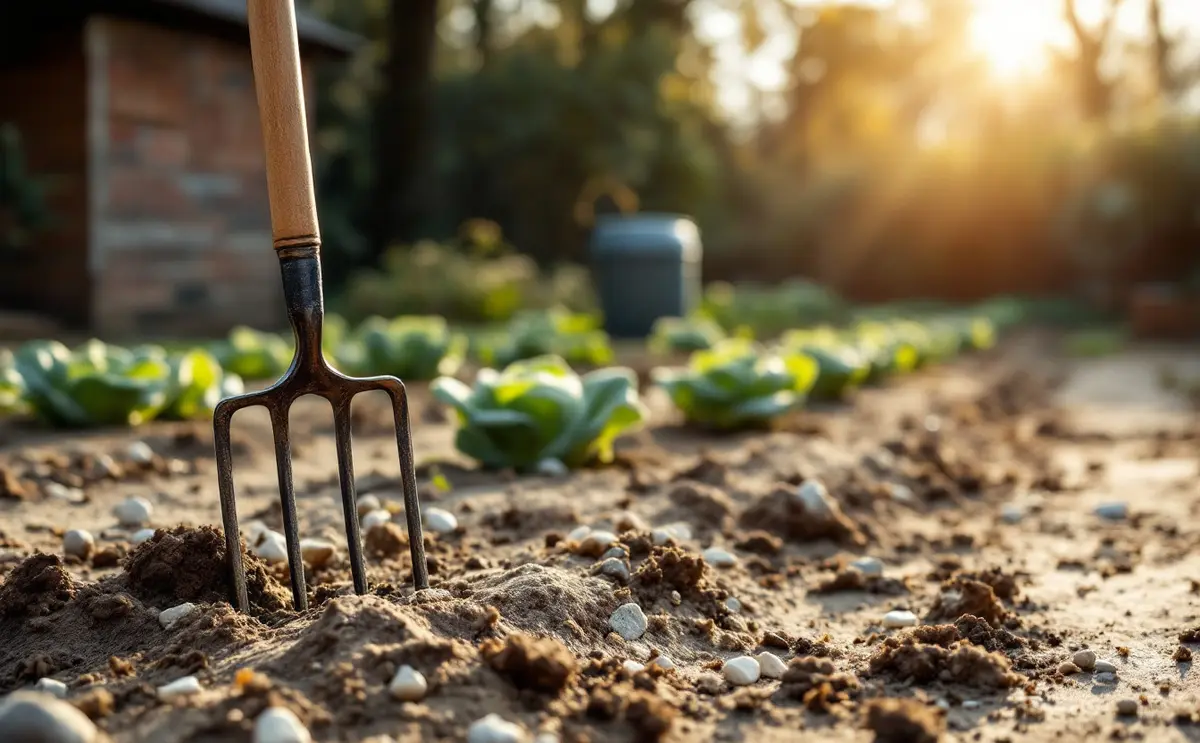
- Test your depth. Push a fork or a thin bar into the border in a few places. If it stops at 15cm, you are on shallow chalk and need to plan for it.
- Wait for a dry-ish day. Working wet chalky soil smears it.
How deep, and how far apart
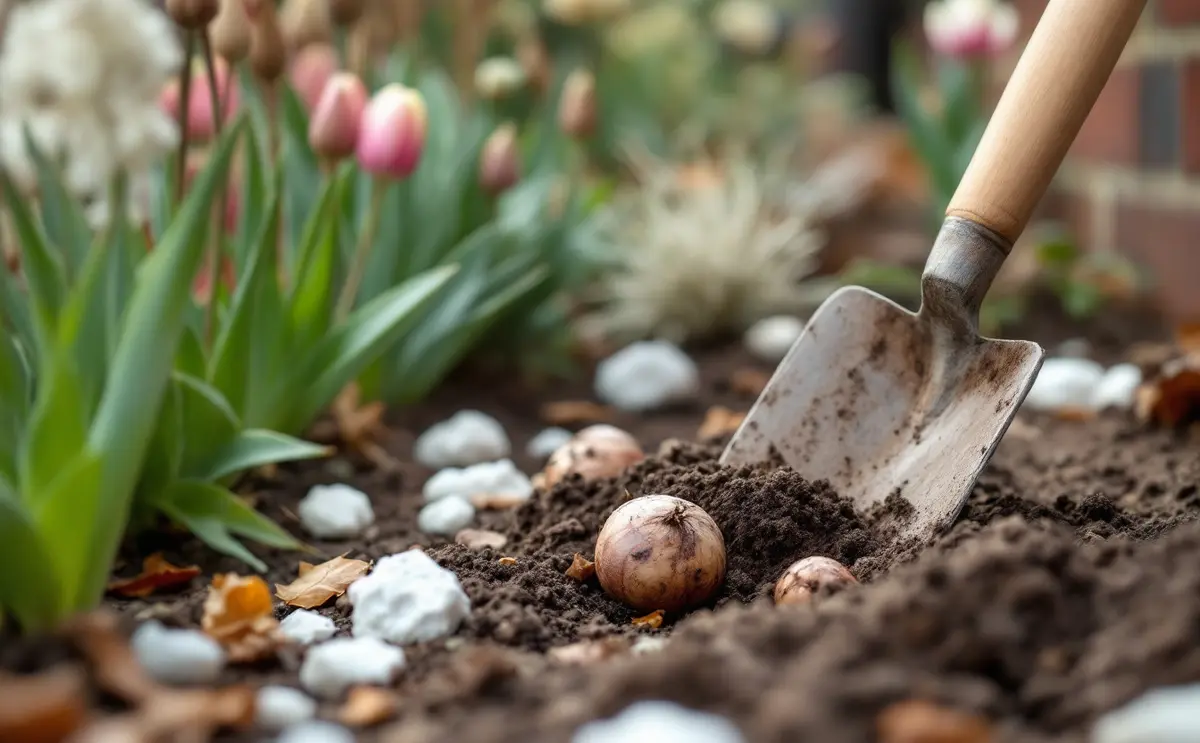
The general RHS rule for bulbs is to plant at two to three times the bulb's own height. For tulips, planting too shallowly is a common reason for poor flowering, and the RHS suggests going deeper in very cold spots. For alliums the RHS gives about four times the bulb's diameter.
| Bulb | Depth | Spacing | Notes |
|---|---|---|---|
| Border tulips | 2 to 3 times bulb height, roughly 10 to 15cm for a large bulb | At least 2 bulb widths | Deeper planting helps them stand and return |
| Small species tulips | 2 to 3 times bulb height | At least 2 bulb widths | Good at the front, in gravel or in pots |
| Small alliums (such as A. sphaerocephalon) | About 4 times bulb diameter | 7.5 to 10cm (3 to 4in) | Plant in groups of a dozen or more |
| Large alliums (such as A. stipitatum 'Mount Everest') | About 4 times bulb diameter | At least 20cm (8in) | Needs shelter from wind |
Pointed end up for tulips. With alliums the top is usually obvious; if not, plant the bulb on its side and it will sort itself out.
When the spade hits chalk
On the thinnest soils you will meet the rock before you reach the depth in the table. There are three honest answers.
The first is to break it. A sharp spade or a crowbar will usually go through the top of the chalk, which is often fractured and lumpy. Loosen a planting pit a little deeper than you need, put the loosened chalk back mixed with garden compost, and set the bulbs on that. The roots will follow the cracks down.
The second is to build up. A border can be raised by a few centimetres with a deep mulch of compost or leaf mould spread over the top after planting. It counts towards the depth and feeds the soil at the same time.
The third is to stop fighting and use pots for the big showy tulips, keeping the shallow ground for small species tulips and alliums, which cope with less soil.
What I would not do is plant shallowly and hope. Shallow tulips flop, split into small non-flowering bulbs and are easy work for squirrels.
Feeding a hungry soil
Chalk soils are often low in nutrients and lose organic matter quickly. Bulbs carry their first year's flower inside them, so the first spring will be fine whatever you do. Whether they flower again depends on how well the leaves can feed the bulb after flowering.
For tulips the RHS suggests a weekly potassium-rich liquid feed, such as tomato feed, once growth starts in March, stopping when the leaves turn yellow. Alliums do not need regular feeding. For both, a mulch of well-rotted compost over the border in late autumn or winter does more good than anything bought in a bottle. The piece on chalk garden plants for thin, dry soil has more on mulching and feeding this kind of ground.
Tulips that come back on alkaline soil
Most big modern tulips are, in practice, bedding: magnificent once, disappointing after. The RHS says the most reliable for flowering year after year are the Darwin hybrid tulips and the Kaufmanniana cultivars. The Darwin hybrids are tall, with large rounded flowers; the Kaufmannianas are short and early, with flowers that open wide in sun, and they suit the front of a border or a rockery.
The species tulips are where chalk gardeners really score. The RHS picks out several that multiply in full sun with good drainage, the very conditions a gravel garden on chalk provides:
- Tulipa saxatilis Bakeri Group, soft lilac with a yellow centre.
- Tulipa orphanidea Whittallii Group, a burnt orange.
- Tulipa kolpakowskiana, small and yellow.
Two others take part shade and moister soil, so they are for the richer corners: T. sylvestris, which spreads by underground stems, and T. sprengeri, a late red species that seeds itself.
Give any tulip you hope to keep the best conditions you have: full sun, the deepest planting you can manage, no competition from heavy ground cover, and the leaves left on until they die back naturally. Cut off the seedheads after flowering so the plant does not waste its energy.
Alliums: easy, but plan for the leaves
Alliums are among the most reliable bulbs on chalk, and the bees love them. Their one fault is that the leaves start to wither around the time the flowers open. The RHS advice is to plant them where other plants will hide the foliage, and that suits a cottage border well. Push them in among catmint, hardy geraniums, sage or the grey-leaved plants that do so well on chalk.
Three of the RHS suggestions give a long season:
- Allium cristophii, with big starry globes, for the front of a border.
- Allium sphaerocephalon, small drumstick heads in July and August, after most alliums have finished.
- Allium stipitatum 'Mount Everest', tall and white, for the back.
Strictly, the RHS recommends planting alliums in early to mid autumn, so November is late for them. If yours are still in the bag, plant them now rather than wait for a perfect moment; a bulb in the ground does better than a bulb on a shelf. Leave the seedheads on after flowering. They stand well into winter and look fine with frost on them.
Bulbs in pots
Pots solve the shallow-soil problem and let you move the display where you want it. The RHS mixes are simple:
- For tulips you will treat as a one-year show: three parts peat-free multipurpose compost to one part grit.
- For tulips you want to keep: three parts peat-free loam-based compost to one part grit.
- For alliums: either peat-free general-purpose compost, or equal parts peat-free John Innes No. 3, peat-free multipurpose and horticultural grit, in a deep pot.
Set tulips close, about a finger's width apart, with the compost finishing about 2.5cm below the rim. You can layer two or three levels of bulbs, a "bulb lasagne", with the biggest and latest at the bottom. The RHS suggests around a dozen tulips in a 45cm pot. Stand pots somewhere sheltered over winter, and move them out of the worst rain if the compost is getting sodden.
Squirrels and other diggers
Grey squirrels dig up freshly planted tulips, and a newly turned patch of border is an advertisement. The RHS suggests laying chicken wire over pots and over planted ground, removing it once the leaves come through. Pushing sprigs of holly into the soil may also put them off. Planting tulips among daffodils, which squirrels leave alone, can help as well.
Questions people ask about bulbs on chalk
Is it too late to plant in late November or December?
For tulips, no. The RHS gives a planting window from September to December, with November as the usual month. Plant firm, healthy bulbs as soon as you can.
Should I lift my tulips after flowering?
You can. The RHS describes lifting when the leaves yellow, about six weeks after flowering, drying the bulbs and storing them somewhere dark and ventilated until autumn. On free-draining chalk I leave the Darwin hybrids and species tulips in and lift only the fancy ones I know will not come back.
My soil is very limy. Will that harm the bulbs?
Tulips like neutral to alkaline soil, so no. The RHS only suggests adding lime for tulips where soil is more acid than pH 6, which on chalk it will not be.
Can I plant bulbs in the vegetable plot?
Alliums share pests and diseases with onions and leeks, and the RHS advises keeping them off ground where onions have grown. If you garden an allotment as well, keep ornamental alliums at home. The piece on a first season on a chalk allotment covers the edible side.

Alice gardens on thin, flinty chalk and keeps an allotment that teaches her something new each season. She writes about cottage plants, vegetables and gardening with birds in mind.