Fieldfares and redwings: the winter thrushes on the chalk

Some time in October, usually on a still, clear night, the sky over the villages starts to speak. Stand in a dark garden in Lilley or out on the lane above Great Offley around ten o'clock and you may hear it: a thin, high "tseep", drawn out and slightly hoarse, coming down from somewhere you cannot see. Then another, a little further off. Then a pause, and three or four together. Those are redwings, migrating in the dark, and they are the first sign that the winter thrushes are back.
A week or two later the fieldfares make their own entrance, and they are not quiet about it. A hawthorn that was silent on Monday is full of big grey and chestnut birds by Thursday, all chattering at once, and when you get too close they burst out of the top of the hedge in a loose, complaining crowd.
This piece is about those two birds: how to tell them apart, what they eat, and where to look for them on the chalk between King's Walden, Offley and Lilley through the winter.
Where they come from
Both are thrushes, close cousins of the blackbird and the song thrush, and both come to Britain for the winter from further north and east. The BTO says the redwings that winter here come from Iceland and from Fennoscandia (Norway, Sweden, Finland and the neighbouring parts of Russia), and that their average arrival date in autumn is around the first of October, with the earliest birds turning up in the second half of September. Fieldfares arrive from Fennoscandia, western Russia and eastern Europe, reaching the east coast from early October.
How many come depends on what happens to the berry crop back home. When the rowans and junipers of Scandinavia fail, the birds move further and in bigger numbers, and a hard winter on the continent can push a fresh wave across the North Sea in midwinter. The BTO's older survey figures put the UK wintering numbers of each species at roughly seven hundred thousand, though both organisations are careful to say that the totals swing a good deal between winters.
On the conservation lists both birds look worse than they are in a Hertfordshire hedge. Fieldfare is on the red list and redwing on the amber list, but that is because of their tiny and dwindling breeding populations in the far north of Britain. As winter visitors they are common.
Telling them apart
You will often see the two species together, so it helps to know the differences well enough to pick them out at a glance.
| Fieldfare | Redwing | |
|---|---|---|
| Size | Big, bigger than a blackbird, close to a mistle thrush | Small, slightly smaller than a song thrush |
| Head | Blue-grey crown and nape | Brown, with a bold cream stripe over the eye |
| Back and rump | Chestnut back, pale grey rump that flashes as it flies off | Plain warm brown |
| Breast | Yellowish wash, heavily marked with dark arrowheads | Whitish, streaked rather than spotted |
| Flanks and underwing | White underwing in flight | Rusty red flanks and underwing, the bird's name |
| Usual call | A harsh, chattering "chack-chack-chack" | A thin "tseep", often at night; a soft "chup" when feeding |
| Habit | Stands very upright, moves in purposeful hops | More furtive, quick to slip into cover |
In practice I go by three things. Grey rump flashing away from me means fieldfare. A stripe over the eye like a raised eyebrow means redwing. And if the flock is noisy and sounds annoyed, there are fieldfares in it.
Listening for them
Calls are the easiest way in. The fieldfare's chatter is dry and rattling, a bit like a mistle thrush with a grudge. A flock going over calls almost constantly, so you can follow it across a field with your eyes shut.
The redwing's night call is worth a special effort in October and early November. Go out after dark on a calm, clear evening, away from the road, and listen upwards. The BTO has found that thrush calls are more frequent over brightly lit places than over dark villages, possibly because lights attract or confuse the birds, so do not be surprised if you hear more from the edge of Luton or Hitchin than from a dark lane.
What they eat, and when
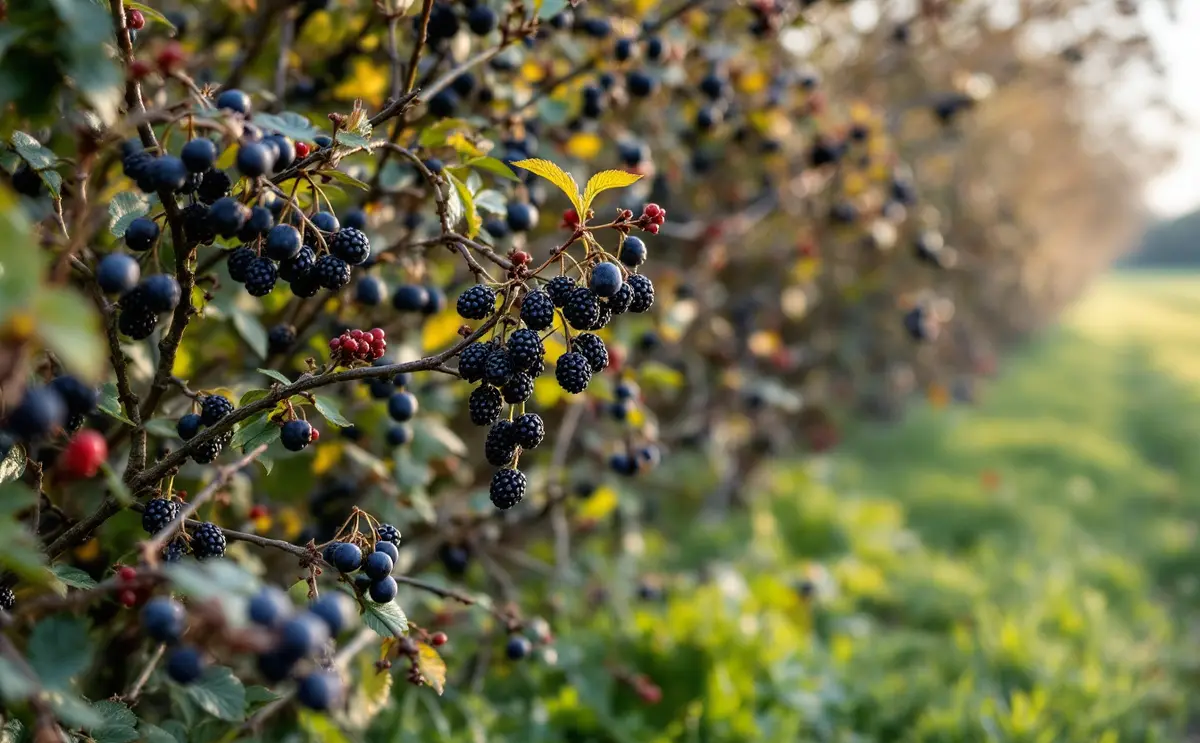
The winter thrushes follow the fruit. The Sussex Wildlife Trust puts hawthorn haws first on their menu, followed by rowan, yew, dog rose and holly. Classic studies of berry-eating birds in Britain found fieldfares taking mostly haws, rosehips, holly and ivy berries, with redwings favouring holly and hawthorn. Rowan is valuable early in the winter, if the resident blackbirds have not already cleared it.
That gives the season a rough shape on the chalk:
- Late October and November: haws. The tall, untrimmed hawthorns along tracks and old field boundaries are where the action is. Flocks strip one hedge and move to the next.
- December: holly, rosehips and whatever haws are left. The flocks become more mobile as the easy fruit runs out.
- Midwinter onwards: ivy berries, which ripen late, and fallen apples. Once the berries are gone both species turn to the ground, probing short grass and pasture for earthworms and other soil animals.
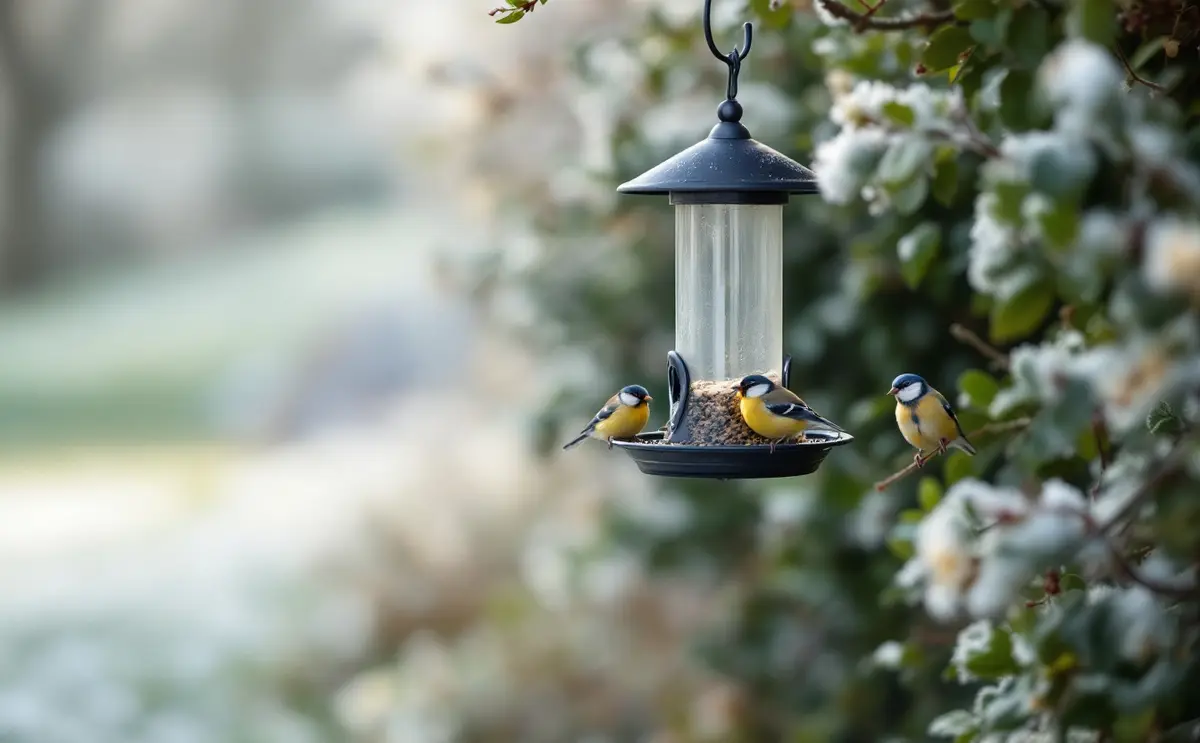
- Hard weather: when frost or snow locks the fields, they move into gardens, orchards and churchyards. This is the time to put out halved old apples, which I wrote about in the piece on winter bird feeding for a cottage garden.
It follows that the hedge-cutting regime on a farm decides how many winter thrushes it feeds. A hedge flailed tight every autumn bears very little fruit, because hawthorn bears its flowers on older wood rather than on the current season's shoots, so a yearly trim takes off most of the next crop. A hedge cut every two or three years, or cut in late winter after the birds have had the berries, can be dripping with haws. When you see a big flock working one stretch of hedge and ignoring the next, look at how the two have been cut.
It is also why a little restraint with the sloe bag matters in autumn. There is more on picking with the birds in mind in sloes, blackberries and good manners.
Where to look round the three villages
You do not need a special site. These are birds of open farmland with hedges and scattered trees, which describes most of the country between Lilley and King's Walden. A few kinds of place repay attention.
Tall hedges along tracks and green lanes
The old boundary hedges that line tracks and bridleways are often taller and less tightly cut than hedges along roads. Walk them quietly in November and you will put up flocks every few hundred metres. Keep the sun behind you if you can.
Big open fields after ploughing
On the high, open ground towards Lilley Hoo and Telegraph Hill, flocks drop into fields to feed and stand spread out across the plough or the young cereal like a scattering of grey stones. Scan with binoculars from a gateway. Lapwings and starlings often feed among them.
Pasture and paddocks
Short grass near the villages, where horses or sheep graze, is good from midwinter onwards when the thrushes are hunting worms. Fieldfares run a few hops, stop, cock their heads and stab, much like a blackbird on a lawn.
Churchyards and orchards in a freeze
In hard weather, the yews, hollies and old fruit trees in and around the villages draw birds in from the fields. A churchyard with a big yew can be worth a slow walk round on a frosty morning, keeping to the paths.
Watching without spoiling it
Winter is the hungry season, and a bird that is flushed again and again burns energy it cannot easily replace. A few habits help:
- Stop and watch from a distance rather than walking up to a feeding flock to get a better look.
- Use gateways and hedge gaps as hides. A person standing still against a hedge is far less alarming than one walking across an open skyline.
- Keep to the rights of way. The flocks feed in the middle of fields, and you will see them perfectly well from the path.
- Keep dogs close. A dog running ahead along a hedge clears the birds out of it for the next half hour.
What to take
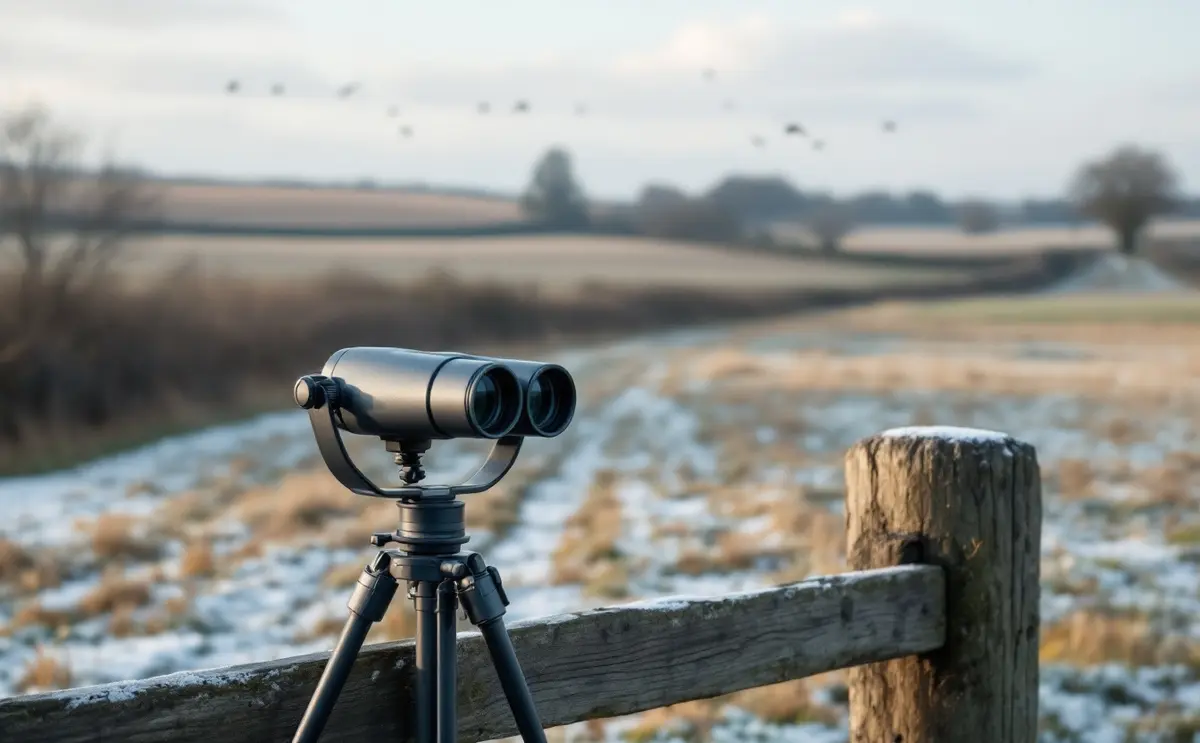
Binoculars make the difference between "a flock of thrushes" and knowing which ones. An 8x42 is a good fit for this kind of watching, bright enough for a dull November afternoon and wide enough to follow a flock in flight. The guide on choosing binoculars for farmland birding goes into why. For checking plumage details when you get home, a good field guide such as the Collins Bird Guide shows both species in all their variations, including the paler and darker individuals that can make you doubt yourself.
Questions about winter thrushes
Are the fieldfares I see in March the same birds that arrived in October?
Not necessarily. Flocks move around a lot through the winter, following food and weather, and fresh birds can arrive during cold spells. By March and April the birds are heading back north, and the BTO says redwings have usually gone by mid-April. A late flock of fieldfares chattering in a hedge in early spring is often a group on its way through.
Could a thrush in my garden be a song thrush rather than a redwing?
Quite possibly. The song thrush is a resident, slightly larger, with a plain face, buff wash and neat round spots on the breast. The redwing's eyestripe and the red under the wing settle it. If you can see the stripe, it is a redwing.
Why have I not seen any yet?
Numbers and timing vary from year to year with the berry crops further north. Some autumns the first big flocks are late, and a mild spell can keep them on the continent until a cold front pushes them across. Keep listening on clear October and November nights; the redwings overhead are often the first you will know of it.
Bryony spends early mornings on field edges listening for skylarks and yellowhammers. She writes about farmland birds, hares, wild flowers and the life of the hedges.