A family day out on the chalk: short walks, picnics and things to spot
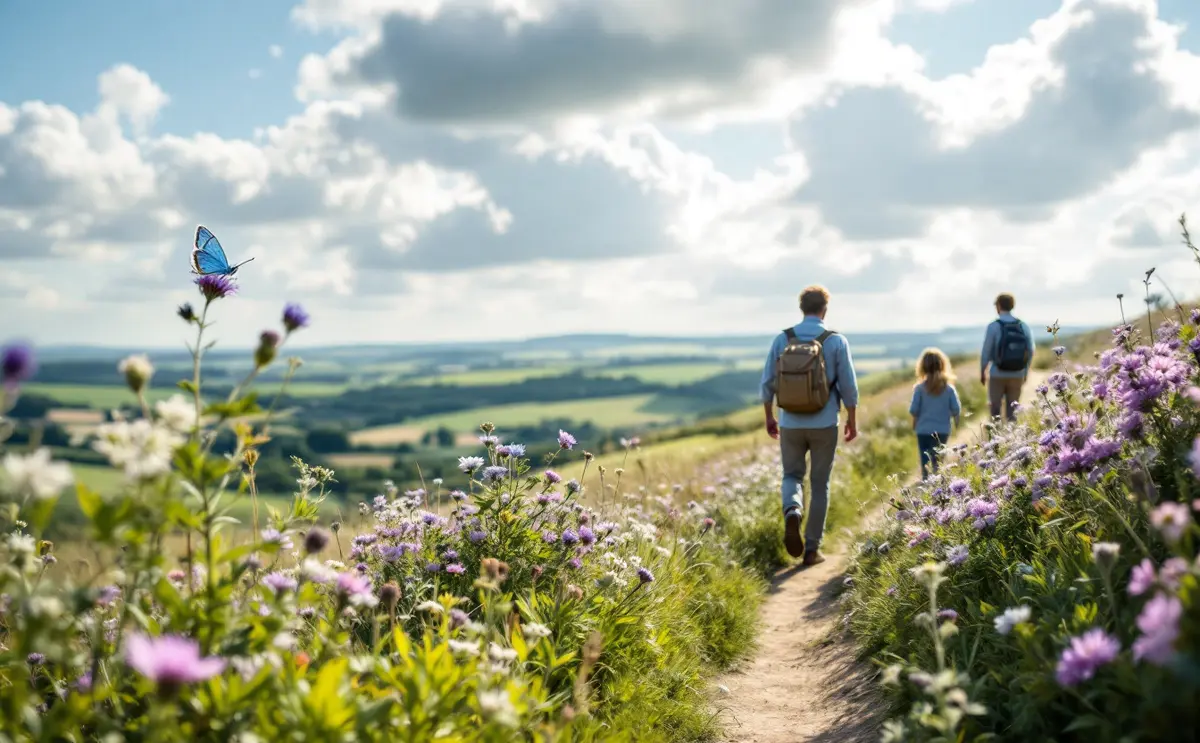
When we first came out here from town with the children, I planned the day as if it were a hike. We had a route, a time to be back and a picnic packed so tightly it could not be opened without a spoon. By the second stile the youngest had sat down in the grass and announced that she lived there now.
So this is not a route guide. It is a way of putting a summer day together in the countryside round Lilley, Offley and King's Walden that works with children rather than against them: short walks, proper stops, something to look for, and a sense of what is expected of you on someone else's farmland.
The night before
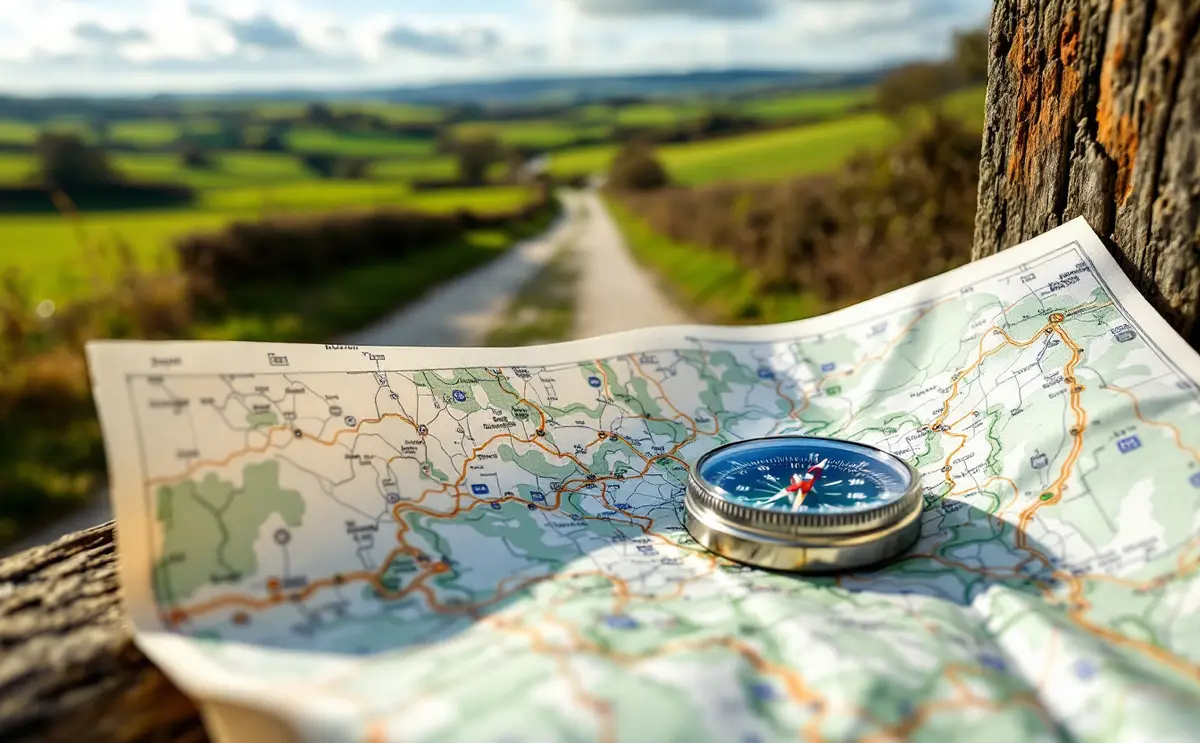
Get out the map. The OS Explorer 193 sheet covers all three villages at a scale where you can see each field boundary, and our guide to reading an Explorer map explains the symbols if they are new to you. Look for a short loop or an out-and-back on public footpaths and bridleways, with a point of interest in the middle: a hilltop, a wood, a church tower.
Then halve your ambitions. An adult's afternoon walk is a long day for a six-year-old. Children walk in bursts, stop for every beetle, and need carrying at unpredictable moments. The walk timer gives an adult estimate using Naismith's rule, which is a useful starting point, but double it for small legs and add time for snacks.
Pack the night before too. The list is further down.
Morning: one short walk, done properly
Summer mornings are the best time for children on the chalk. The grass is cooler, the light is soft, and the butterflies are only just warming up, which makes them easier to watch.
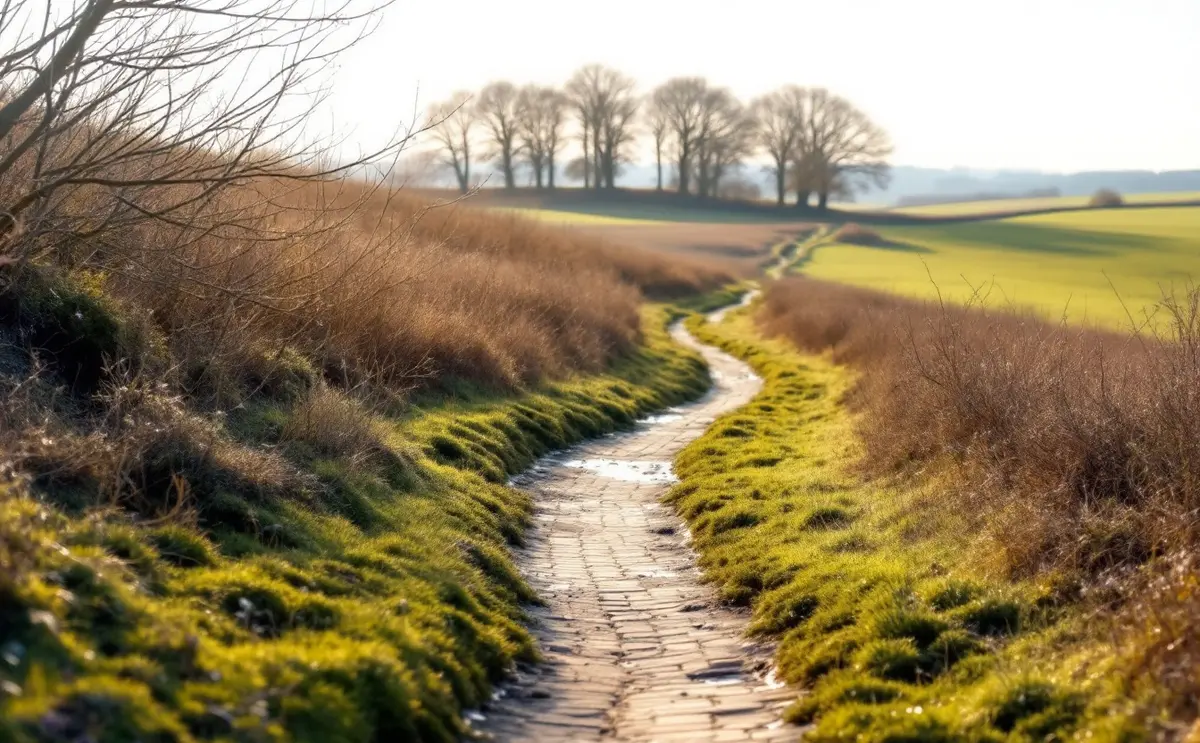
The Icknield Way near Lilley is a good place to start. The old route forms the northern edge of Lilley and Offley parishes, and the Icknield Way Path, the long-distance walking route that follows it, crosses the chalk grassland of Telegraph Hill. Our guide to the Icknield Way from Lilley to Telegraph Hill describes it in more detail. With small children, you do not need to go far along it. Walking out until the view opens up, then back, is a perfectly good morning.
Stiles and gates
Field paths here have gates, kissing gates and the occasional stile. Children love stiles and are terrible at them. Go over first, then lift or guide them over, one at a time, and keep dogs on a lead while you do it.
The Countryside Code is clear about gates: leave them as you find them. A closed gate keeps animals in. An open gate may be letting them reach water. In a family group, give one adult the job of being last through and checking each gate. Older children usually enjoy being put in charge of this, and they take it seriously.
Keeping to the path
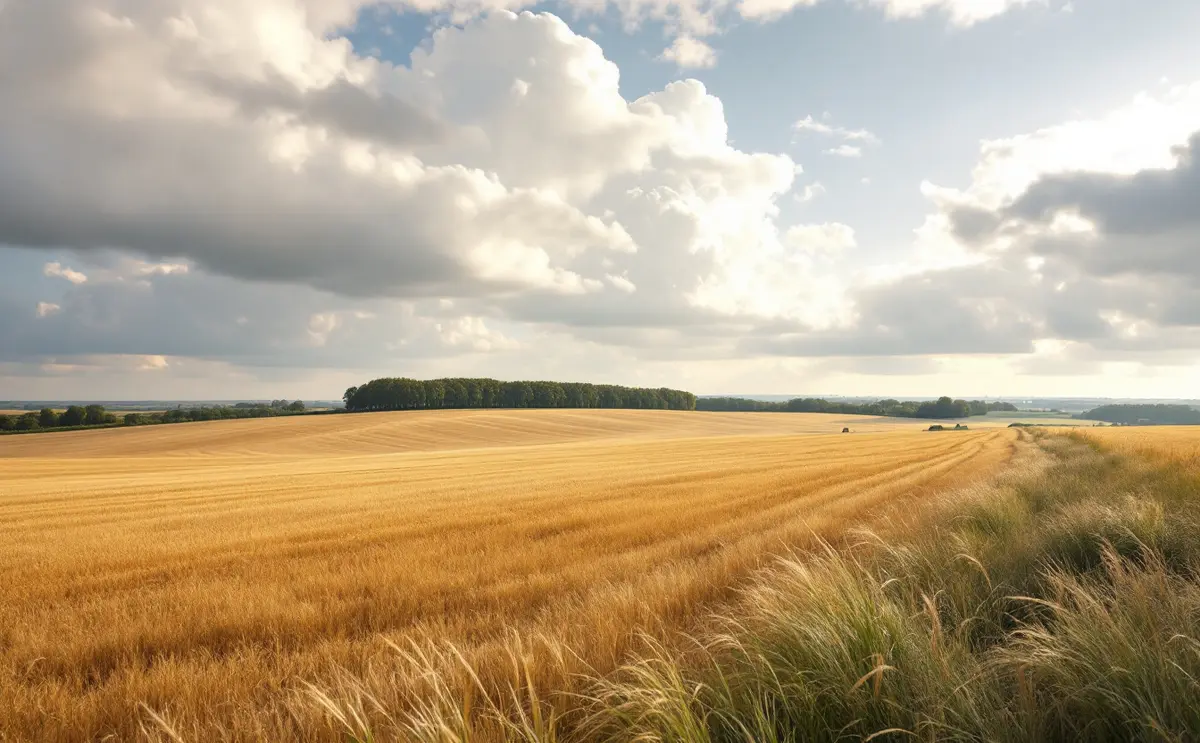
Most of the land round the three villages is arable farmland, and in July many fields are standing crops close to harvest. A public footpath across a field gives you the right to walk along its line, not to wander. Keep children on the path, even when the crop is high and the temptation to run into it is strong, and even when the path is muddy. The Countryside Code asks everyone to stick to marked paths unless they are on open access land.
Cattle, sheep and horses
You may meet livestock on grassland and in pasture. The Countryside Code asks walkers to give animals plenty of space, particularly mothers with young, and never to feed them. Keep children close and calm, walk steadily round the herd rather than through it, and do not let them run at animals for a closer look.
Dogs should be on a lead near livestock. If cattle do come at you, the Code's advice is to let the dog off the lead so that you can both get to safety separately. Cattle are often far more interested in the dog than in you.
Midday: picnic manners
Children judge a day out by the picnic, so it is worth getting right.
Pick your spot with care. A footpath through a field is for passing along, and a family spread across it on a blanket blocks the way for everyone else and sits in someone's crop. Better places are the edge of a village green or recreation ground, open access land if your map shows any, or a wide verge where you are not in anyone's way. Wherever you stop, keep an eye out for cowpats, nettles and ant hills.
The rest is simple:
- Take every bit of litter home, including fruit peel and apple cores. The Countryside Code points out that food waste harms wildlife and livestock as well as looking bad.
- No barbecues or fires, unless signs say they are allowed. Dry summer grass catches easily.
- Keep the noise to a cheerful level. People live and work in these fields.
- Leave gates, fences and hedges as they are. A gap in a hedge is not a shortcut.
Afternoon: things to spot on the chalk
Chalk grassland in July is one of the best places in England to show a child a butterfly. The flowers that grow on thin, dry chalk soil feed a great many insects, and on a warm afternoon the slopes hum.
Butterflies
Two to look for:
- Marbled white: a medium-sized butterfly patterned in black and white like a chequerboard. The Wildlife Trusts give its flight season as June to August and say it likes flower-rich chalk and limestone grassland, often feeding on purple flowers such as field scabious.
- Chalkhill blue: the males are a pale, silvery blue with a dark border and white fringes; the females are brown. The Wildlife Trusts give its season as July to September. Its caterpillars feed on horseshoe vetch, which grows only on chalk and limestone. Herts and Middlesex Butterfly Conservation lists Telegraph Hill among the places the species can be found.
Children can count how many different colours they see, rather than trying to name them all. Ask them to watch where a butterfly lands, and which flower it chooses.
Chalk flowers
In high summer look for knapweed with its purple brush-like heads, pale blue field scabious, yellow bird's-foot trefoil, the small bright yellow flowers of rock-rose, and wild marjoram and thyme, which smell wonderful if you rub a leaf between your fingers. If you are early in the season you may still catch orchids.
Leave the flowers where they are. On nature reserves picking is generally not allowed, and a flower left in place feeds the next butterfly. A phone photo or a quick sketch makes a better souvenir.
Late afternoon: a church from the outside
The three villages each have an old church, and looking at one from the churchyard path is a gentle way to finish the day. Treat them as historic buildings in someone else's care. A church may be locked, so check locally if you hope to go inside, and never assume it will be open.
St Mary Magdalene at Offley is a good one for a spotting game. Its tower was rebuilt in brick in the early nineteenth century and has a small spire, which stands out among the flint of the rest of the building. The chancel at the east end was rebuilt in 1777 and is faced in pale Portland stone, quite different from the grey flint walls of the nave. Ask the children to find where the stone changes. Our guide to St Mary Magdalene, Offley has more on the building, and the piece on reading a flint church explains what to look for in the walls of any church round here.
At St Mary's, King's Walden, the west tower has battlements and a stair turret built into one corner. Children enjoy working out which corner and how the stair inside must wind.
In any churchyard, a few rules keep everyone comfortable. Walk on the paths, do not climb on gravestones or tombs, keep voices low, and remember that people may be visiting graves.
What to pack
- More water than you think. Do not count on finding a tap, and there is little shade on open chalk in July.
- Sun hats and sun cream. Pale chalk paths reflect the light.
- Long, light trousers and socks for walking through long grass.
- A small first aid kit with fine-tipped tweezers or a tick removal tool.
- Snacks for every stop, plus one extra for the walk back.
- The map, and a phone with charge.
- A bag for rubbish.
- A magnifying glass or a simple bug pot, for looking, not keeping.
Ticks
Ticks live in long grass and scrub, and summer grassland is one of the places you meet them. Advice from UK health authorities is to keep to clear paths where you can, cover legs, and check yourself and the children when you get home. Look carefully at skin folds, armpits, the groin, the waistband, behind the knees, the back of the neck and the hairline, and on small children check the head and neck especially.
If you find one, remove it with fine-tipped tweezers or a tick tool, gripping as close to the skin as possible and pulling up slowly and steadily. Keep an eye on the bite for several weeks. A spreading red rash or flu-like symptoms afterwards are a reason to contact your GP or NHS 111 and mention the tick bite.
Questions families ask
Can we bring the dog?
Yes, on public rights of way, but keep it under close control and on a lead near livestock, and look out for local signs asking for leads at certain times of year.
Is there anywhere to buy food?
Plan as if there is not. Take what you need with you, and you will not be disappointed.
What if it rains?
Chalk paths turn slippery and sticky in rain. Wellies or boots with grip, a shorter walk and a longer look at a church tower from the lane make a fine wet-day version of the same trip.

Sunil came to the villages from a nearby town and has been asking questions about them ever since. He writes about country customs, hedgerow food and family days out.