Why old yards crack: chalk, frost and the drive in front of the cottage
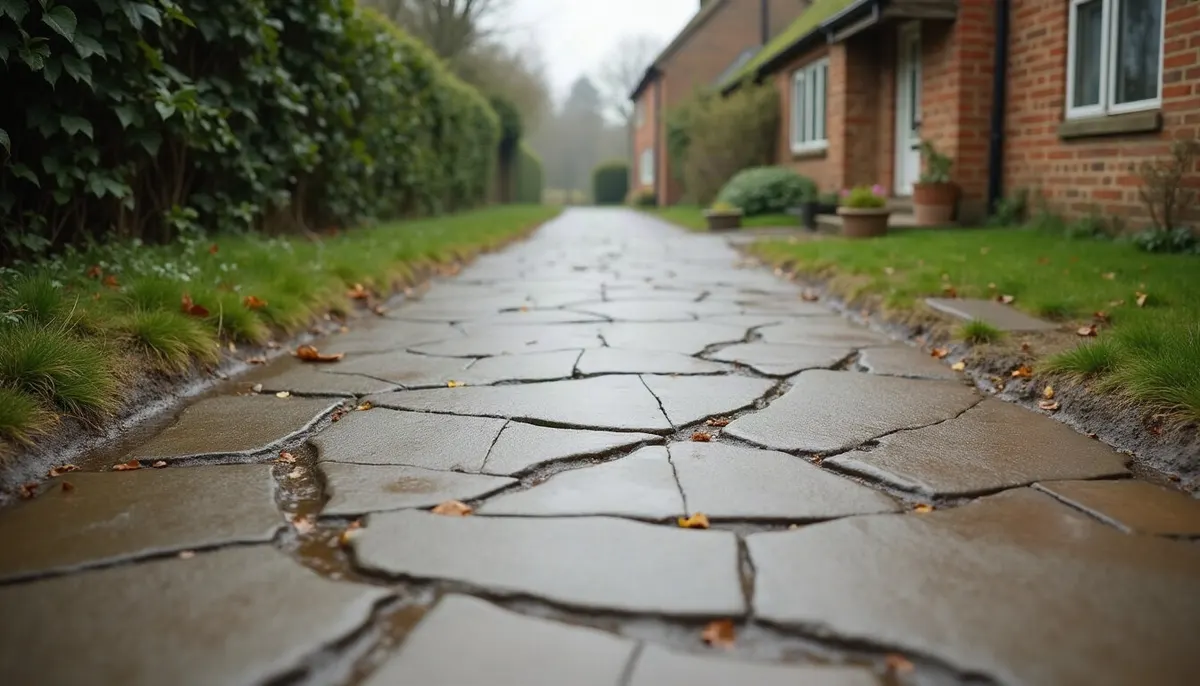
At the end of many old lanes in these villages there is a yard or a drive that has been patched more times than anyone remembers. Rammed chalk, then gravel, then perhaps concrete or tarmac laid over the top, each layer with its own cracks. Readers in Tennessee who are researching how to fix cracked Driveways live with a very different climate, but they face the same basic problem: ground that moves, water that gets in, and a hard surface that cannot follow.
I am more at home with enclosure maps than with concrete, so I will try to separate what can be said with some confidence about why these surfaces fail from what is guesswork. The piece starts with the ground, moves to the surfaces people have laid on it over the generations, then to reading the cracks themselves, and ends where it ought to, with a professional looking at the ground before anyone picks up a tool.
What lies under a chalk village drive
Chalk is a soft rock, and near the surface it is usually broken into fragments rather than solid. On the hilltops of this part of Hertfordshire it is often capped by a stiffer, reddish layer that geologists call clay-with-flints. The two behave quite differently. Broken chalk drains well but can soften when it stays wet and then freezes. Clay holds water, swells when wet and shrinks when it dries, and it can open cracks in a dry summer that close again in a wet winter.
A cottage yard might sit on one, the other, or a patchwork of both within a few strides. That alone explains a good deal about why one corner of a drive cracks while the rest stays sound. We rarely know exactly what is underneath without digging, which is a theme that will come back.
Weather adds the rest. Water that gets into a crack and freezes opens it a little wider each winter. Heavy rain softens the ground at the edges, especially where a drive has no kerb or edging to hold it. In a hot summer the clay shrinks back. Over many seasons, small movements add up to a surface that looks tired.
What the old surfaces tell us
Before cars there was little need for a smooth drive. Farmyards and cottage approaches were commonly made of rammed chalk, flint or whatever hard material lay closest, packed down by feet, hooves and cartwheels. Some yards had cobbles or brick paving near the door, where the traffic and the mud were worst. When you lift a modern surface in an old village you sometimes find these earlier layers underneath, which tells you the ground has been carrying traffic for a long time.
What we cannot usually say is when each layer went down, or who laid it. Ordinary work of this kind was seldom written down, and the evidence is mostly in the ground itself. I would be wary of anyone who tells you confidently that a yard is a particular age just from the look of it.
What the old surfaces do teach is that the base matters more than the top. A thin layer of concrete laid over soft, uneven ground will crack along the lines of whatever lies beneath it. A surface laid on a firm, well-drained base will last far longer, whatever the material.
Patches tell their own story too. A drive that has been mended again and again in the same place is usually reporting a problem that the patching never reached: a soft spot, a leaking drain, a root, or water arriving from somewhere uphill. Each repair seals the top and leaves the cause alone. When I see a yard with a quilt of different concretes in one corner, I take it as a strong hint that the answer lies below, not on the surface.
Reading the cracks
Cracks are evidence, and like any evidence they are worth recording before anyone decides what they mean. A photograph each season, taken from the same spot, tells you more than any single look. Some patterns are common:
- fine, shallow cracks across the surface, often from the material drying and shrinking
- cracks that open in summer and close in winter, which point to movement in the ground below
- one side of a crack sitting higher than the other, which suggests settlement or heave
- cracks running towards a tree or a large hedge, where roots may be drawing water from clay
- edges breaking away where there is nothing to hold them in place
- puddles that sit in the same spot after every shower, showing where the surface has sunk
None of these, on its own, tells you what the cure is. That depends on what is happening underneath, and that is exactly the part nobody can see from the surface.
Notebook margin: Walk any chalk lane after a wet winter and you will see the same story in miniature: ruts where water has stood, flints pushed up by frost, and a crown of firm ground where the old track was best drained. The lane is a fair teacher for anyone puzzling over a cracked drive at home.
When to ask for a professional opinion
Small cosmetic cracks in an old drive are part of its character and need little more than keeping weeds and water out of them. Cracks that keep widening, uneven slabs that catch a foot, water that runs towards the house, or cracking that seems to continue into a garage floor or a wall are a different matter. Any crack that reaches the building itself should be looked at by someone qualified, because it may have nothing to do with the drive and everything to do with what the house is standing on.
A good contractor will start by asking about the ground and the drainage rather than the surface. They will want to know where the water goes when it rains, what is underneath, whether trees are close, and how the cracks have changed over time. That is where your photographs earn their keep. They should then tell you honestly whether a repair to the surface will last, or whether the base needs attention first.
A firm that handles both concrete work and foundation repair, as the Tennessee contractor linked above does, is well placed to say whether a cracked drive and a crack near the house are related. In a climate with hot, humid summers and heavy rain, ground movement and drainage are worth discussing early. Here on the chalk, the same questions apply, and I would always ask for an opinion on the ground before anyone talks about the top layer.
What to have ready
- photographs of the cracks over at least a few seasons
- a note of where water stands after rain
- the position of trees, hedges and drains near the drive
- anything you know about earlier surfaces or repairs
The year on the chalk
- Winter: watch where water lies and freezes, and note which cracks widen in a frost.
- Spring: photograph the drive from the same spots and pull weeds from the joints.
- Summer: look for cracks that open as the ground dries, especially near trees.
- Autumn: clear leaves and silt from drains and edges before the wet months begin.
We cannot always know what lies beneath an old yard, but we can watch it patiently, and that patience is usually the best evidence a professional can be given.

Nathaniel reads parish histories, enclosure maps and church walls with equal interest. He writes about manors, monuments, bells and what the evidence does and does not tell us.