Reading a village war memorial, and researching the names with care
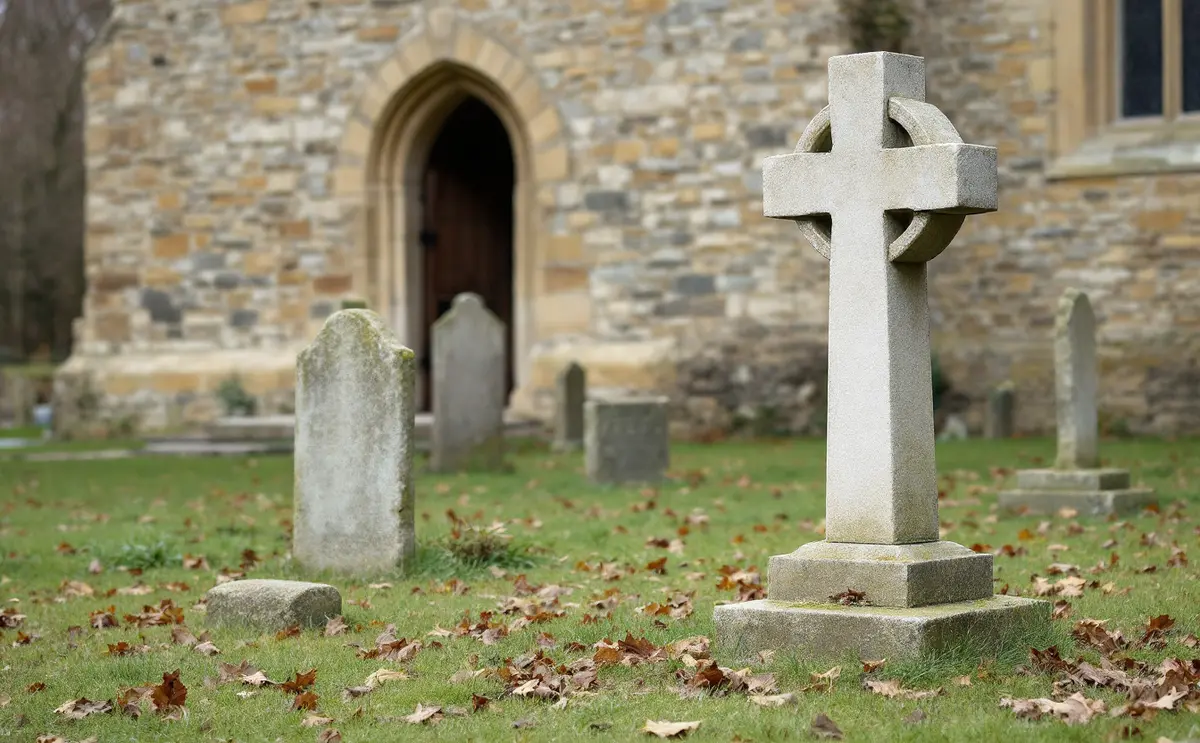
Every November the memorials come back into focus. For most of the year a village cross or a marble tablet in a church is something you pass. In Remembrance week it is cleaned, wreaths are laid against it, and people stand in front of it reading the names. This is a good moment to learn how to read one properly: what kind of object it is, what its words and lists actually record, and how to find out more about the people named without trampling on anyone's feelings.
I will not name any of the men on the memorials in our three parishes here. The lists are public and anyone can read them, but this piece is about method, and the names belong to families as much as to history.
A memorial is a document
It helps to treat a war memorial the way you would treat a brass or a painted board in a church: as a document made by particular people, at a particular date, for particular reasons. Most English parish memorials to the First World War were put up between about 1919 and the early 1920s, raised by local subscription and designed by committees who argued about the form, the wording, the site and whose names should go on. The Second World War names were usually added later, often on the same monument, sometimes on a new tablet beside it.
So a memorial answers three questions at once. Who died? How did the community choose to remember them? And when, and by whom, was it made? The piece on words on the walls in the three churches looks at inscriptions more generally, and the same habits of reading apply here.
The kinds of memorial you will meet
The Imperial War Museums' War Memorials Register, which records more than 100,000 memorials across the United Kingdom, sorts them by type. The ones you are most likely to find in a north Hertfordshire village are:
- Crosses, freestanding, often on a stepped base, in a churchyard, on a green or at a road junction. Some carry a carved figure of Christ, making them a crucifix or calvary.
- Tablets and plaques inside a church, in stone, marble, brass or bronze, sometimes framed in carved oak.
- Rolls of honour, painted boards or framed lists. Some record everyone from the parish who served, not only those who died, which makes them valuable and easily overlooked.
- Windows and church fittings: a stained-glass window, a lychgate, a screen, an altar or a set of bells given in memory.
- Useful memorials: a village hall, a playing field, a bus shelter, a clock. People often walk past these without realising what they commemorate. Look for a small plaque by the door.
- Individual memorials: a tablet put up by one family to one son, or an extra line added to a family gravestone for someone buried abroad. The register counts these too.
The register also records memorials to civilians, to animals and to the safe return of those who came home, so a "thanksgiving" tablet in a church may be on it as well.
What the three villages have
The register and the related War Memorials Online site are the places to start for any parish. For Offley, War Memorials Online records a pair of grey marble tablets with gold lettering in St Mary Magdalene, one for each world war, set in the former organ recess on the north side of the chancel and dedicated in 1969. The register also has an entry for an outdoor stone crucifix in Offley, dedicated in 1920. These two can be read together: the first is a village's original response; the second, nearly fifty years later, is a church gathering its names in one place. There is more on the building itself in the guide to St Mary Magdalene, Offley.
For Lilley and King's Walden, search the register by place name and look carefully at the results, because entries are filed under the name of the town or village, and hamlets such as Ley Green, Breachwood Green or Cockernhoe may appear under their own names or under the parish. Check the entry against what you see on the ground. A register record is a summary by volunteers, and things move: tablets are relocated, boards are taken down for repair.
If you visit a church to see a memorial, bear in mind that buildings may be locked outside services and that keys and access are a local matter. Check locally before you go, and respect any notices.
Reading the lists
The names on a memorial are not neutral. They were chosen, ordered and spelled by people who knew the men, and the choices tell you things.
Order
Lists are usually either alphabetical or arranged by rank, officers first. A rank order says something about the village's sense of itself in 1920. Some lists are grouped by year of death, which lets you see the bad years of the war at a glance.
What each line gives
A full entry may give surname, forenames or initials, rank, regiment or ship, and sometimes date of death or decorations. Many village memorials give much less: a name and initials only. Do not assume a missing regiment means anything; it may simply have been the committee's style.
Who is included, and who is not
Committees had to decide whether to include men who had lived in the parish briefly, men born there who had moved away, men who died of illness after discharge, and men who died after the Armistice. You will find men on two or three memorials in different places, and men on none. Absences are not necessarily oversights; they may reflect a family's wishes or simple lack of information.
Spelling and initials
Names were often written from memory. A misspelling on the stone can be the reason you cannot find someone in the records, so try variants.
Additions
Look at the lettering. Second World War names are frequently cut by a different hand, in a slightly different letter, on a new panel or on the base. Later additions, including names from conflicts since 1945, sometimes appear too.
The words around the names
The texts on memorials are short and were chosen carefully. Some phrases recur across the country:
- "Their name liveth for evermore", from Ecclesiasticus, the line chosen for the Commonwealth war cemeteries' Stone of Remembrance.
- "Lest we forget", a refrain from Rudyard Kipling's poem "Recessional" of 1897, written long before the war and taken up afterwards.
- "The Glorious Dead", "Greater love hath no man" (from St John's Gospel), and "To the glory of God and in memory of".
Note also the dates. Many First World War memorials give "1914 to 1919" rather than 1918, because the peace treaties were not signed until 1919. Read the wording on the stone, not what you expect it to say, and write it down exactly, including the original spelling and punctuation.
Researching a name, step by step
If one of the names catches you, and it often does, here is a careful way to go further.
- Record the memorial first. Photograph it straight on, in good light, and transcribe the name exactly as cut. Note where the memorial stands and any other text.
- Search the War Memorials Register. Searching by name will show whether the same person appears on other memorials, which can reveal where they were born, worked or lived.
- Search the Commonwealth War Graves Commission's records. The CWGC commemorates around 1.7 million people of the Commonwealth forces who died in the two world wars. Its records commonly give service number, unit, date of death, place of burial or commemoration and, in some cases, the names and address of parents or a wife. Note the cut-off dates: the CWGC covers deaths from 4 August 1914 to 31 August 1921 and from 3 September 1939 to 31 December 1947. A man who died of his wounds in 1923 will not be there, though he may well be on the village memorial.
- Go to the census. The 1911 census, and the 1921 and 1939 records for the later war, can place a family in a particular house or hamlet and give occupations: farm labourer, groom, gardener, domestic servant. That is where a name turns back into a person who walked these lanes.
- Look for service records and newspapers. Many First World War army service records were destroyed by bombing in 1940, so do not be discouraged if you find none. Local newspapers of the period often printed casualty notices and sometimes short accounts or photographs.
- Read the parish material. Parish magazines, vestry minutes and any published village history may describe how the memorial was planned and unveiled.
Keep notes of where each fact came from. With common surnames it is very easy to merge two men into one.
Doing it respectfully
Researching the dead of a small village means researching families, some of whose descendants may still live nearby. A few principles keep the work decent:
- Do not publish details of living people, and be cautious about home addresses even for the dead if relatives still live there.
- If you contact a family, do it gently, through a letter rather than a knock, and accept a no.
- Present uncertainty as uncertainty. "Probably the son of" is honest; a confident guess is not.
- Do not touch, rub, clean or chalk a memorial to read it. Raking light from a torch, held low and to the side, shows worn lettering without harm. Organisations such as the War Memorials Trust give advice on care; cleaning is a job for specialists.
- Leave wreaths, crosses and personal tributes exactly as they are.
Why it is worth the effort
A village memorial is often the only public record that a particular labourer or groom from a hamlet on the chalk ever existed. Reading it slowly, then following one name through the census and the commission's records, gives you a sense of the parish that no general history can. It also reminds you that the memorial is itself a historical object, worth recording and looking after like any other part of the church fabric discussed in reading a flint church.
Go with a notebook, stand back first and look at the whole thing, then come close and read every word.

Nathaniel reads parish histories, enclosure maps and church walls with equal interest. He writes about manors, monuments, bells and what the evidence does and does not tell us.